
Title : In silico design of a multi-epitope dengue vaccine in southeast asian HLA allele populations
Abstract:
Dengue virus (DENV) causes significant morbidity across Southeast Asia, with the Philippines consistently among the most severely affected countries. Existing licensed vaccines have notable limitations: Dengvaxia poses antibody-dependent enhancement (ADE) risk in seronegative individuals, while neither commercially available vaccine adequately incorporates HLA allele frequencies representative of Filipino and Southeast Asian populations. This study attempted to address this gap through a multi-step immunoinformatics approach to design a population-optimized multi-epitope vaccine (MEV) targeting conserved regions of the DENV Envelope and Non-Structural 1 proteins.
A geographically stratified dataset of 152 sequences was aligned using MAFFT, and candidate epitopes were predicted using NetMHCpan-4.1, NetMHCIIpan-4.3, ABCpred, and BepiPred-3.0, guided by a Southeast Asian HLA allele panel inclusive of the Filipino-signature allele HLA-A*34:01. Candidates underwent multi-layer safety screening for antigenicity (VaxiJen 2.0), allergenicity (AllerTOP), and toxicity (ToxinPred2). A validated set of seven epitopes was incorporated into 96 permutation constructs using AAY, GPGPG, EAAAK, and KK linkers, together with human beta-defensin-3 as adjuvant and the PADRE universal T-helper epitope.
All constructs exhibited favorable predicted physicochemical profiles, including negative GRAVY scores, instability indices below 40, and a Codon Adaptation Index of 1.0 for E. coli expression via in-frame pET-28a(+) cloning simulation. Among the constructs, Construct_00003 emerged as a lead candidate based on a MolProbity score of 0.990, a predicted TLR4 binding free energy of -21.0 kcal/mol (PRODIGY), and favorable conformational behavior in GROMACS molecular dynamics simulation. In silico immune profiling using C-ImmSim predicted Th1-polarized IgG responses, IFN-gamma dominance, and sustained immunological memory. Philippine HLA population coverage was estimated at 96.60%, compared to 52.73% for a world-generic panel.
All findings are computational in nature and would require experimental and clinical validation before any practical conclusions can be drawn. This work is offered as a preliminary exploration of population-specific dengue vaccine design, with the hope of contributing to more inclusive representation of Southeast Asian HLA diversity in immunoinformatics research.
Biography:
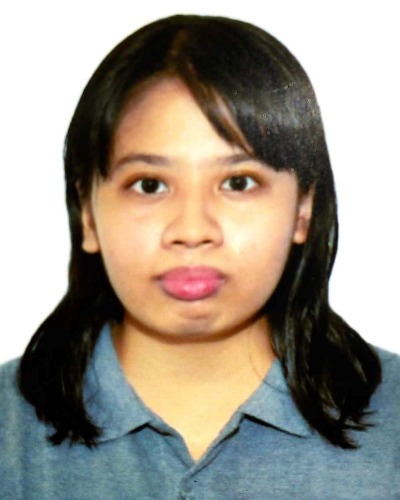
Jedd Pearl M. de Leon is a graduating BS Chemistry student at the University of the Philippines Los Banos, where she works on computational approaches to vaccine and drug design. Her undergraduate thesis explores the in silico design of a multi-epitope dengue vaccine for Filipino and Southeast Asian HLA populations, conducted under the guidance of Dr. Gladys Cherisse J. Completo. She is a DOST-SEI Merit Scholar and has received support from the 2026 Dr. Eliezer A. Albacea Undergraduate Research Grant for the Computational Sciences. She hopes to continue her studies in computational chemistry at the graduate level.
Copyright 2024 Mathews International LLC All Rights Reserved
